
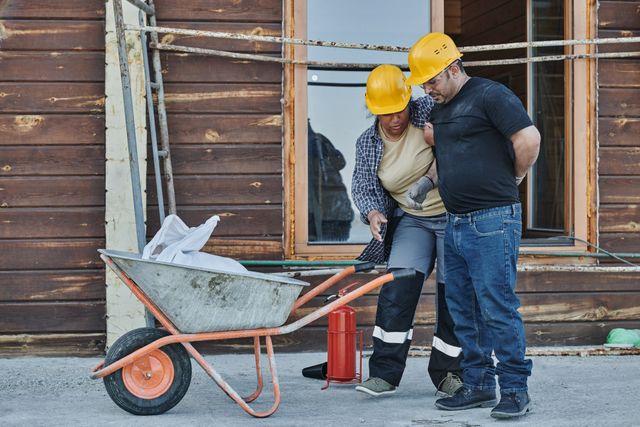

Construction accident claims rarely come down to one hospital bill or one broken bone. Their value often depends on how the injury changes work, mobility, income, and daily life over time. A strong claim looks at the full story, not just the accident scene.
How Catastrophic Falls From Elevation Reshape Claim Valuation
Falls from scaffolds, ladders, roofs, lifts, and unfinished floors often create some of the most serious construction injuries. These cases may involve brain trauma, spinal damage, crushed joints, fractures, or injuries that require months of treatment. The higher the fall and the more severe the impact, the more closely insurers look at long-term medical needs and permanent limitations.
A construction accident attorney may review fall protection rules, harness use, guardrails, anchor points, jobsite supervision, and witness statements. Those details help show whether the fall happened because safety steps failed. A claim can carry greater value when evidence shows the accident could have been prevented with proper protection.
The Role of Multiple Responsible Parties in Settlement Potential
Construction sites often include several companies working at once. A general contractor, subcontractor, property owner, equipment supplier, or safety manager may each control part of the worksite. More than one party can share responsibility when poor coordination, unsafe scheduling, or ignored hazards lead to an injury.
A construction accident lawyer studies contracts, daily reports, site photos, and safety records to see who had control over the dangerous condition. Multiple responsible parties may also mean multiple insurance policies. That can affect settlement potential, especially when one policy does not fully cover the injured person’s losses.
Why Lifetime Trade Skill Loss Carries Significant Financial Weight
A serious injury can take away more than a paycheck. Many construction workers spend years building trade skills that depend on strength, balance, grip, vision, mobility, and endurance. A hand injury, back injury, knee damage, or shoulder tear may prevent a worker from returning to the same trade.
A personal injury lawyer may look at the worker’s job history, certifications, tools used, and physical demands of the trade. Losing the ability to frame, weld, climb, operate equipment, or perform electrical work can affect income for decades. That long-term loss often becomes one of the most important parts of claim valuation.
Understanding How OSHA Findings Influence Case Strength
OSHA findings can play an important role in construction accident claims. Citations, inspection notes, hazard reports, and violation records may show that a company failed to follow required safety practices. Even one documented safety failure can help explain why the injury occurred.
A Huntsville personal injury lawyer may review OSHA-related evidence alongside other records. These findings do not automatically decide a case, but they can strengthen the injured person’s position. Insurers often take claims more seriously when official safety violations support the facts.
What Extensive Surgical Recovery Means for Damage Calculations
Surgery often raises the value of a construction accident claim because it shows the injury required serious medical treatment. Operations involving spinal repairs, joint reconstruction, hardware placement, tendon repair, or fracture stabilization can lead to long recovery periods. Follow-up visits, therapy, medication, and time away from work all add to the total impact.
A personal injury attorney may review surgical records, doctor notes, therapy plans, and future treatment opinions. The claim should account for pain, scarring, reduced movement, and the risk of future procedures. A quick offer may not reflect the real cost of recovery after major surgery.
How Defective Equipment Evidence Changes Claim Trajectory
Defective equipment can shift a case in a different direction. A broken lift, faulty saw, failed harness, worn forklift brake, damaged ladder, or malfunctioning guard can show that the injury involved more than worker error. Equipment condition often tells a story that people miss at first.
A construction accident lawyer in Huntsville AL may inspect the machine, review maintenance logs, and check whether a manufacturer, rental company, or service provider played a role. Defective equipment evidence can open the door to additional claims. This matters when the injury came from a product or machine that should have been safer.
The Impact of Long Term Physical Restrictions on Compensation
Permanent restrictions can change a person’s entire work life. A doctor may limit lifting, climbing, bending, standing, overhead work, or machine operation after a serious injury. Those limits can affect job options even when the injured worker appears to have recovered on the outside.
An injury lawyer may use medical restrictions to show how the accident affects future earning ability. The claim may include lost income, reduced job opportunities, and changes in daily life. People searching for a personal injury lawyer near me often need help because long-term restrictions are easy for insurers to downplay.
Why Future Vocational Limitations Often Drive Higher Claim Values
Vocational limitations focus on what work the injured person can realistically do after the accident. A worker may not be able to return to construction, earn the same wage, or perform jobs that require physical labor. This issue can carry major financial weight in serious claims. A Huntsville personal injury attorney may work with vocational and medical experts to explain future job limits in practical terms. The Lackey Law Firm supports injured workers by helping them review construction accident evidence, understand potential claims, and evaluate the financial impact of medical care, missed income, lost trade capacity, and future work limitations.