


Core Tax Obligations for Independent Consultants
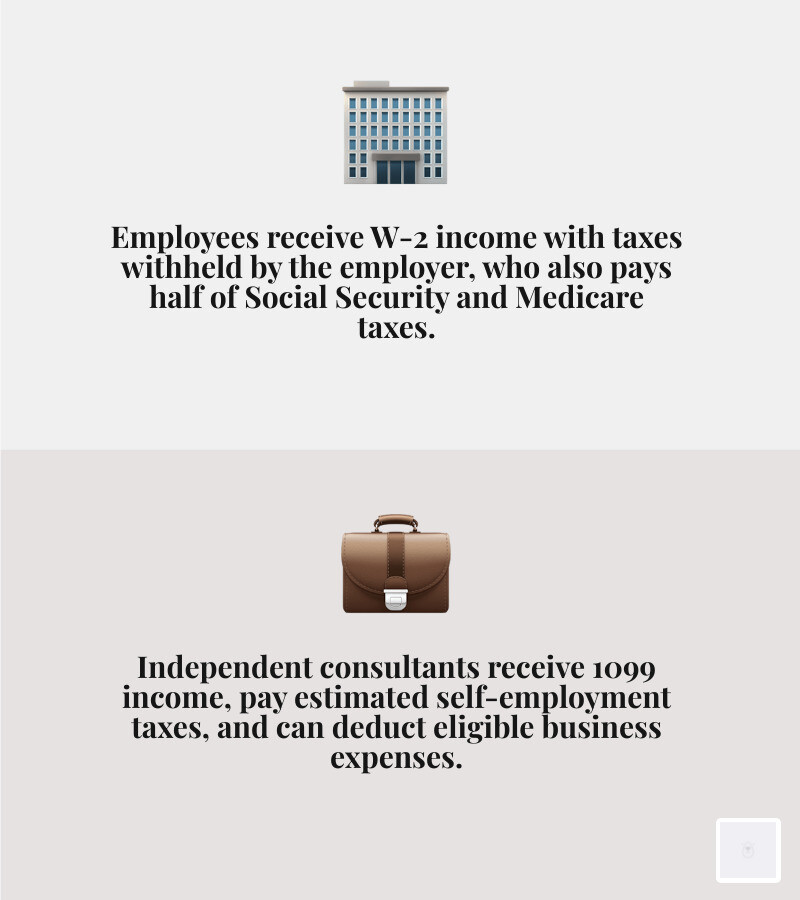
As independent consultants, we operate with a distinct set of tax responsibilities that differ significantly from those of traditional employees. Understanding these core obligations is the first step toward effective tax compliance and financial stability.

Understanding Your Consultant Tax Compliance Responsibilities
One of the most significant differences for consultants is the responsibility for self-employment taxes. This includes contributions to Social Security and Medicare, which for W-2 employees are typically split with their employer. As independent contractors, we are both the employer and the employee, meaning we are responsible for the full 15.3% (12.4% for Social Security up to the annual limit, and 2.9% for Medicare with no limit). This can be a substantial sum, often catching new consultants by surprise.
Because no employer is withholding taxes from our paychecks, we are also responsible for paying estimated taxes throughout the year. The IRS generally requires us to pay income tax as we earn it. This means making quarterly payments for federal income tax, self-employment tax, and any applicable state and local taxes. These payments are typically due on April 15, June 15, September 15, and January 15 of the following year. Failing to pay enough estimated tax can result in penalties, even if we receive a refund when we file our annual return.
Our business structure significantly impacts our tax compliance. A sole proprietorship, for instance, is the simplest form, where business income and expenses are reported directly on our personal tax return (Form 1040) using Schedule C, Profit or Loss From Business. This structure means our business and personal liabilities are not separate.
For those seeking liability protection, forming a Limited Liability Company (LLC) is common. For tax purposes, a single-member LLC is typically treated as a disregarded entity, meaning it’s still taxed as a sole proprietorship unless we elect otherwise. However, an LLC can also elect to be taxed as an S-Corporation. This can be a strategic move for consultants, as it allows us to pay ourselves a “reasonable salary” (subject to payroll taxes) and then take the remaining profits as distributions, which are not subject to self-employment tax. This can lead to significant tax savings, but it also introduces more complex payroll and filing requirements.
Regardless of our structure, we will likely use Form 1040-ES for estimated tax payments. It’s essential to accurately project our income and expenses to ensure we pay enough throughout the year.
Here is a list of common deductible expenses for consultants that can help reduce our taxable income:
- Home Office Expenses: If our home office is used exclusively and regularly for business.
- Professional Development: Courses, certifications, conferences, and industry publications.
- Technology & Software: Laptops, software subscriptions, internet, and phone services.
- Travel Expenses: Mileage, airfare, lodging, and meals when traveling for business.
- Marketing & Advertising: Website development, online ads, and networking event costs.
- Insurance Premiums: Business liability, health, and disability insurance.
- Office Supplies: Stationery, printing, and other day-to-day supplies.
- Professional Services: Fees paid to accountants, lawyers, and other consultants.
Record-Keeping: The Foundation of Compliance
Effective record-keeping is not just a good practice; it’s the bedrock of sound tax compliance for consultants. Without meticulous records, it becomes incredibly challenging to accurately report income, substantiate deductions, and steer potential audits.
We recommend adopting robust bookkeeping best practices from day one. This includes maintaining a clear and organized system for all financial transactions, whether digital or paper. For many consultants, digital records offer unparalleled convenience and efficiency. Cloud-based accounting software can automate much of the process, categorize expenses, and generate reports, saving us countless hours.
A critical rule for consultants is to separate business and personal finances. This means having a dedicated business bank account and, ideally, a business credit card. Co-mingling funds makes it nearly impossible to track business expenses accurately and can raise red flags with tax authorities.
For expenses like mileage, maintaining a detailed mileage log is essential. Many apps can track this automatically, making it simple to record business trips. Similarly, for all other business expenses, we should keep receipts—digital or physical. Scanning paper receipts and storing them in a cloud-based system ensures they are readily accessible and protected from loss. This proactive approach to record-keeping streamlines tax preparation and provides peace of mind.
Navigating the Complexities of Modern Consultant Tax Compliance
The landscape of tax compliance is constantly evolving, driven by new legislation, economic shifts, and the increasing globalization of business. For consultants, staying abreast of these changes is not merely a recommendation but a necessity to avoid pitfalls and optimize our financial position.
Changing Tax Laws and International Regulations
Major legislative changes, such as the Tax Cuts and Jobs Act (TCJA) in the United States, have reshaped the tax environment for businesses and individuals alike. While some provisions, like the qualified business income (QBI) deduction, can offer significant benefits to eligible consultants, others might introduce new complexities. The speed of change in tax laws, exemplified by the situation in Mongolia where companies find it difficult to stay on top of changes, underscores the universal challenge of adapting to new regulations. The increasing sophistication of tax authorities globally means that we, as taxpayers, need support and advice from experts at all stages of the tax compliance life cycle.
For consultants operating across state lines or even internationally, understanding the nuances of nexus (a sufficient connection to a state or country to trigger tax obligations) is crucial. The landmark South Dakota v. Wayfair Supreme Court decision, for instance, broadened the definition of sales tax nexus, impacting businesses that sell products or services across state lines, even without a physical presence. While primarily affecting sales tax, the principles of economic nexus can extend to income tax, meaning consultants might owe taxes in states where they have significant economic activity, regardless of physical location.
Developing proactive, Elite entrepreneurial tax strategies is crucial for long-term financial health. This involves not just reacting to current laws but anticipating future changes and structuring our businesses to be resilient and tax-efficient.
International Compliance for the Global Consultant
The rise of the digital economy has enabled many consultants to serve clients across the globe, bringing with it a new layer of international tax obligations. Navigating these complexities requires specialized knowledge, as even seemingly minor oversights can lead to significant penalties.
For U.S. citizens and residents, reporting foreign financial assets is a critical obligation. The Foreign Account Tax Compliance Act (FATCA) requires foreign financial institutions to report information about financial accounts held by U.S. persons to the IRS. Simultaneously, the Report of Foreign Bank and Financial Accounts (FBAR), filed with the Financial Crimes Enforcement Network (FinCEN), mandates that U.S. persons with a financial interest in or signature authority over foreign financial accounts exceeding $10,000 at any point in a calendar year must report these accounts. The penalties for non-compliance with FBAR and FATCA can be severe, often reaching $10,000 or more even for non-willful violations.
Another complex area for international consultants is dealing with Passive Foreign Investment Companies (PFICs). As highlighted by experts, PFICs aren’t necessarily “companies” in the traditional sense; many mutual funds, ETFs, REITs, and unit trusts held outside the U.S. can meet the definition. Each PFIC must be disclosed on Form 8621, and failing to do so can result in punitive tax treatment. The rules in this “pocket dimension” of tax law are often counter-intuitive and require expert navigation. For a deeper dive into these intricate international tax issues, especially concerning foreign investments and retirement accounts, exploring resources like the HTJ.TAX podcast and blog provides invaluable insights. They emphasize that “what you think the IRS rules are is irrelevant,” stressing the need for specialized knowledge.
When we earn income abroad, we might also be subject to foreign taxes. To prevent double taxation, the U.S. offers mechanisms like the foreign tax credit, which allows us to offset U.S. tax liability with taxes paid to foreign governments. However, the application of foreign tax credits can be complicated, with specific rules about what income qualifies and how much credit can be claimed. Tax treaties between the U.S. and other countries also play a vital role in determining tax residency, reducing tax rates on certain types of income, and establishing rules for avoiding double taxation. Understanding these treaties is paramount for consultants with international engagements.
State and Local Tax (SALT) Considerations
Beyond federal and international obligations, consultants must also consider State and Local Tax (SALT) requirements. These can vary significantly from one jurisdiction to another, creating a patchwork of rules that can be challenging to steer.
One common question for consultants is whether they need to charge sales tax on their services. Unlike tangible goods, services are not universally subject to sales tax. However, a growing number of states are expanding their sales tax laws to include certain services, particularly those that are digital or related to tangible personal property. The determination often depends on the specific nature of the consulting service and the state’s laws. For instance, some states might tax IT consulting, while others do not.
Furthermore, consultants may need to obtain various business licenses at the state, county, or city level. These licenses are often required to legally operate and can vary based on the type of service provided and the location of the business.
Local income taxes are another consideration in some jurisdictions. While not as widespread as state income taxes, certain cities or counties may impose their own income taxes on businesses or individuals operating within their borders.
For remote consultants, the concept of “nexus” is particularly relevant. While physical presence (like having an office or employees) traditionally established nexus, the Wayfair decision introduced economic nexus, meaning a certain volume of sales or transactions in a state can create a tax obligation, even without a physical footprint. This means consultants working from one state but serving clients in multiple others might inadvertently create nexus in those client states, triggering state income tax or sales tax obligations. Proactive analysis of our client base and revenue streams by state is essential to identify and comply with these varied SALT requirements.
Leveraging Technology and Professional Help for Efficiency
Managing tax compliance can be time-consuming and complex, but modern technology and the right professional support can significantly streamline the process, mitigate risks, and free us to focus on our core consulting work.

The Role of Technology in Tax Compliance
Technology has revolutionized tax compliance, changing it from a manual, error-prone chore into a more automated and efficient process. Tax software and accounting platforms are no longer just for basic calculations; they offer comprehensive solutions for tracking income and expenses, generating reports, and even facilitating estimated tax payments.
Automation is a key benefit. Cloud-based accounting systems can integrate with our business bank accounts and credit cards, automatically importing transactions and categorizing expenses. This reduces manual data entry, minimizes errors, and provides real-time insights into our financial health. Digital expense tracking apps allow us to snap photos of receipts, which are then stored securely in the cloud, eliminating the need for physical paper trails.
AI-driven insights are also emerging as powerful tools. Modern tools leverage principles akin to AI Stoicism Success Strategies by automating repetitive tasks and providing logical analysis. While not replacing human expertise, AI can assist in identifying potential deductions, flagging inconsistencies, and even predicting future tax liabilities based on our financial patterns. This allows for more proactive tax planning rather than reactive compliance. RSM, for example, emphasizes integrating proprietary tax technology platforms like PartnerSight and CorporateSight to modernize compliance processes and mitigate risk by replacing manual processes. This focus on technology, combined with global reach (RSM has 800 offices in 120 countries), showcases the power of tech-enabled solutions.
The benefits extend beyond mere efficiency. Technology improves risk mitigation by providing a clear, auditable trail of all financial transactions. It saves us valuable time that can be reinvested in our consulting practice or personal life. Leveraging technology allows for more strategic planning, helping us optimize our tax position throughout the year, not just at tax time. Whether your success is in tech or in a creative field like Key West art success, a solid financial foundation is non-negotiable.
Choosing a Professional for Consultant Tax Compliance
While technology offers powerful tools, the complexities of tax law often necessitate the expertise of a qualified professional. Choosing the right tax compliance consultant or firm is a critical decision that can significantly impact our financial well-being.
Several types of professionals specialize in tax:
- Certified Public Accountants (CPAs): Licensed by individual states, CPAs offer a broad range of accounting services, including tax preparation, planning, and audit representation. They are often well-suited for complex business structures and financial situations.
- Enrolled Agents (EAs): Federally licensed tax practitioners authorized to represent taxpayers before the IRS. EAs specialize in taxation and can handle all types of tax matters, from preparation to audits and appeals.
- Tax Attorneys: Lawyers who specialize in tax law. They are particularly valuable for complex tax planning, dispute resolution, and legal representation in tax court.
When evaluating a professional, consider their qualifications and industry experience. Do they have specific experience working with consultants or businesses in our niche? Do they understand the unique deductions and compliance challenges we face? A firm like Fortunato Tax Consultants PLLC, for instance, highlights their commitment to providing “the highest level of tax consulting and compliance services,” including international compliance, which is crucial for global consultants.
We should also consider whether we prefer a sole practitioner or a firm with a team approach. While a sole practitioner might offer more personalized attention, a larger firm often provides a broader range of expertise and ensures continuity of service, as emphasized by HTJ.TAX when discussing how to choose an international tax advisor. They highlight the importance of an advisor being part of a team rather than a “one-person show” to ensure comprehensive knowledge and continuity. This is especially true for international tax, where even small amounts of foreign financial activity can lead to substantial penalties, and “interpretation and resolution of these issues… requires specialist knowledge and input.” For more detailed guidance on selecting the right international tax advisor, including considerations for multi-jurisdictional and multilingual capabilities, their article “5 Things to Consider in Choosing the RIGHT International Tax Advisor” is an excellent resource.
Finally, always discuss fee structures upfront. Transparency in pricing helps avoid surprises and ensures we understand the value we are receiving for the services provided. Many firms, like Paro, offer “fractional experts” and leverage AI-matching technology to connect clients with highly skilled finance and accounting experts 20 times faster than traditional recruiting, offering a flexible and efficient model. Their experts bring decades of experience across over 60 industries, accepting less than 2% of applicants, indicating a high level of expertise.
Frequently Asked Questions about Consultant Taxes
What is the biggest tax mistake consultants make?
One of the most common and significant tax mistakes consultants make is failing to pay estimated taxes or underpaying them. As independent contractors, the IRS doesn’t automatically withhold taxes from our income. This means we are responsible for calculating and paying our own income and self-employment taxes quarterly. If we don’t pay enough throughout the year, we can face penalties for underpayment, even if we get a refund when we file our annual return.
Another frequent error is co-mingling personal and business funds. This blurs the lines between our personal finances and our consulting business, making it incredibly difficult to track deductible expenses accurately and prepare for tax season. It also makes it harder to defend deductions in the event of an audit.
Poor record-keeping is closely related. Without meticulous records of all income and expenses, we risk missing valuable deductions or being unable to substantiate claims if questioned by tax authorities. This can lead to overpaying taxes or facing penalties.
Lastly, many consultants miss out on legitimate deductions simply because they aren’t aware of them or don’t track them properly. From home office expenses to professional development and business travel, these deductions can significantly reduce our taxable income. Proactive tax planning and diligent record-keeping are key to avoiding these common pitfalls.
Can I deduct my home office expenses?
Yes, we can deduct home office expenses, but strict rules apply. To qualify, our home office must meet two key criteria:
- Regular and Exclusive Use: The space must be used exclusively for business. This means it cannot double as a guest bedroom, living room, or personal space. It must also be used regularly for our business activities.
- Principal Place of Business: Our home office must be our principal place of business, meaning it’s where we conduct the most important or essential activities of our business. If we conduct business at other locations (e.g., client sites), our home office must still be the primary place where we conduct administrative or management activities.
We have two options for deducting home office expenses:
- Simplified Option: This allows us to deduct a standard amount of $5 per square foot for up to 300 square feet of home office space, capped at $1,500 per year. It’s simpler as it doesn’t require detailed record-keeping of actual expenses.
- Actual Expenses Method: This method allows us to deduct a percentage of actual home-related expenses, such as mortgage interest, rent, utilities, home insurance, repairs, and depreciation. The percentage is based on the proportion of our home’s square footage used exclusively for business. This method requires meticulous record-keeping.
The home office deduction is reported on Form 8829, Expenses for Business Use of Your Home. Taking a home office deduction can have implications when we sell our home, as it might affect the capital gains exclusion on the sale of a primary residence. Consulting with a tax professional can help us determine the best method for our situation and ensure compliance.
Do I need to charge sales tax on my consulting services?
Whether we need to charge sales tax on our consulting services varies significantly by state and, in some cases, by local jurisdiction. Unlike tangible goods, which are almost universally subject to sales tax, services are treated differently across the United States.
Historically, most states did not impose sales tax on services. However, a growing number of states are expanding their tax base to include certain types of services, particularly as the economy shifts towards service-based industries and digital offerings. The determination often depends on the specific nature of the consulting service we provide.
For example:
- Some states might tax all services unless specifically exempted.
- Others might only tax services that are related to tangible personal property (e.g., consulting on software implementation, which might be considered taxable if the software itself is taxable).
- Digital products, Software-as-a-Service (SaaS), and certain online services are increasingly being subjected to sales tax in many states, even if the consultant doesn’t have a physical presence in that state (due to economic nexus rules established by cases like South Dakota v. Wayfair).
It’s crucial to check the specific sales tax laws in each state where we have clients or where our services are delivered. Many state revenue departments provide online guides or have specific rules for services. If we determine that our services are taxable in a particular state, we’ll need to:
- Register for a sales tax permit in that state.
- Collect sales tax from our clients.
- Remit the collected sales tax to the state on a regular basis (e.g., monthly, quarterly, or annually).
Failing to collect and remit sales tax when required can lead to significant penalties, interest, and even personal liability. When in doubt, it’s always best to consult with a tax professional experienced in state and local tax (SALT) matters.
Conclusion
The journey of a consultant is one of independence and opportunity, but it also demands a proactive and informed approach to tax compliance. We’ve explored the foundational elements, from understanding self-employment and estimated taxes to the critical role of meticulous record-keeping. We’ve also steerd the complexities introduced by evolving tax laws, international obligations, and varied state and local requirements.
The good news is that we are not alone in this journey. By embracing technology for efficiency and strategically engaging with qualified tax professionals, we can transform tax compliance from a daunting task into a manageable and even empowering aspect of our business. Taking control of our financial health today is paramount for long-term success. A proactive approach, combined with organizational discipline and expert guidance, ensures that we can continue to thrive in our consulting endeavors with confidence and peace of mind.
For comprehensive tax support and compliance solutions custom to your unique consulting needs, we encourage you to explore our dedicated services. Learn how we can help you stay compliant and optimize your financial strategy by visiting our tax support and compliance page.