


Why a Budgeting App is a Non-Negotiable Tool for UAE Residents
In a dynamic and often high-cost environment like the UAE, managing personal finances effectively isn’t just a good idea—it’s a necessity. Budgeting apps have emerged as indispensable tools for residents, changing the often-daunting task of financial management into an accessible and empowering experience.
One of the primary reasons these apps are non-negotiable is the immediate clarity they offer. As we noted in the introduction, a significant portion of individuals remain unaware of their monthly spending. Budgeting apps directly address this by providing real-time insights into where every dirham goes. This newfound financial awareness is the first step towards gaining control.
Beyond simply tracking, these applications empower us to set and achieve meaningful financial goals. Whether you’re saving for a down payment on a home, planning a dream vacation, funding your children’s education, or building an emergency fund, budgeting apps allow you to define these objectives, track your progress, and stay motivated. They help us visualize our aspirations and break them down into manageable steps.
Furthermore, budgeting apps are crucial for effective debt management. They can help us identify areas of overspending, allocate funds towards debt repayment, and track our progress towards becoming debt-free. For many, navigating loans and credit in a new country can be complex, and these tools provide a clear roadmap.
By offering detailed expense tracking and insights into savings goals, budgeting apps enable us to make informed decisions. They move us from reactive spending to proactive financial planning, ensuring that our money works for us, not against us. This precision in financial planning is key to maintaining stability and achieving our long-term financial aspirations in the UAE.
Must-Have Features in a Budgeting App for the UAE
When selecting a budgeting app for the unique financial landscape of the UAE, certain features move beyond mere convenience to become absolute necessities. The right app should seamlessly integrate with your financial life, provide actionable insights, and prioritize the security of your sensitive data.
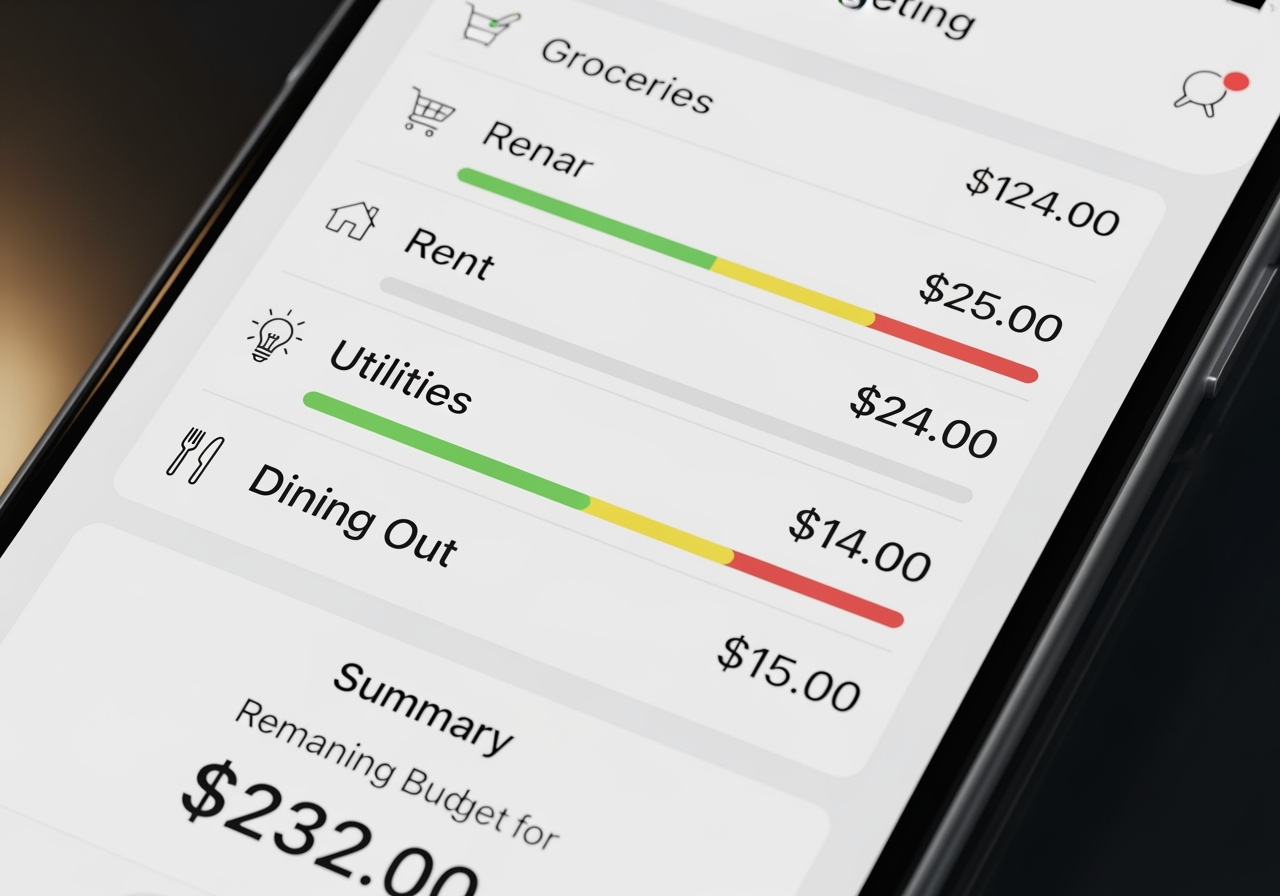
First and foremost, UAE bank integration is paramount. An effective app should be able to automatically sync with major banks in the Emirates, such as Emirates NBD, ADCB, FAB, Mashreq, and others. This eliminates the tedious manual entry of transactions, providing a real-time, comprehensive view of your finances. This integration is often facilitated through Open Banking technologies, which allow secure, consent-based access to your financial data. Companies like Spare are building the API infrastructure that enables these seamless connections, providing account information and payment initiation services that power many modern fintech solutions.
Crucially, the app must support AED currency for all transactions and reporting. While many international apps exist, local currency support ensures accuracy and relevance to your daily spending.
Automated categorization of transactions is another time-saving feature. Instead of manually tagging every purchase, the app intelligently categorizes your spending (e.g., groceries, transport, dining), allowing you to quickly identify spending patterns and areas for adjustment.
A user-friendly interface is vital for consistent use. The app should be intuitive, easy to steer, and present complex financial data in clear, digestible formats. Features like bill reminders help you avoid late fees and manage recurring payments efficiently, while robust financial reports provide visual summaries of your income, expenses, and savings progress over time.
Advanced Features for Power Users
For those looking to take their financial management to the next level, certain advanced features can significantly improve the utility of a budgeting app:
- Investment Tracking: Beyond basic budgeting, some apps allow you to link investment accounts, track portfolio performance, and see how your investments align with your overall financial goals.
- Debt Payoff Planners: These tools help you strategize and visualize your debt repayment journey, often incorporating methods like the debt snowball or avalanche to accelerate progress.
- AI-powered Insights and Personalized Recommendations: Apps leveraging artificial intelligence, like Yabi and Mafhoom, can analyze your spending habits, forecast future expenses, and offer custom advice on how to save more, reduce spending, or optimize your financial health. Mafhoom, for instance, aims to transform raw data into actionable insights, helping users make smarter decisions.
- Subscription Management: With the proliferation of subscription services, this feature helps you identify, track, and manage recurring payments, ensuring you’re not paying for services you no longer use.
Security and Privacy: A Top Priority
Given the sensitive nature of financial data, security and privacy must be the absolute top priority when choosing a budgeting app. We cannot overstate the importance of these considerations.
Look for apps that employ bank-level data encryption (both at rest and in transit) to protect your information from unauthorized access. Two-factor authentication (2FA) adds an extra layer of security, requiring a second verification step beyond your password.
Many reputable apps use read-only access to your bank accounts. This means they can view your transactions to categorize them, but they cannot initiate transfers or make changes to your accounts. This significantly reduces risk.
It’s also beneficial to check if the app adheres to international and local regulations. For example, apps registered in the Dubai International Financial Centre (DIFC), like Yabi and Crunch, operate under a robust regulatory framework designed to protect consumer data. They often partner with regulated third-party data aggregators (such as Salt Edge, Lean Technologies, Plaid, or Tarabut) that specialize in securely connecting to banks without the app itself storing your bank credentials. Crunch, for instance, emphasizes that it does not view or store your bank account credentials, relying on these regulated third-party providers.
Always review the app’s privacy policy to understand how your data is collected, stored, and used, and ensure it aligns with your comfort level.
Top Contenders: A Review of the Best Budgeting App UAE Options
The UAE market offers a growing selection of budgeting apps, each with its unique strengths and target audience. Here, we dig into some of the top-rated options, examining how they cater to different financial needs and lifestyles in the Emirates.

For the Goal-Oriented Saver: Sav
Sav positions itself as more than just a budgeting app; it’s a dedicated savings companion designed to make saving both easy and rewarding. Its core appeal lies in its innovative approach to encouraging financial discipline.
- Save Now, Buy Later (SNBL): This unique feature, highlighted as a first in the GCC region, allows users to gradually save for a desired purchase, with brands sometimes contributing to the goal.
- Gamification and Rewards: Sav incentivizes positive saving habits through gamified elements. Users earn ‘Sav coins’ for saving, which can be redeemed for tangible rewards like free coffees, movie tickets, and e-commerce discounts. This turns saving into an engaging activity rather than a chore.
- Goal-Oriented Savings: The app focuses heavily on helping users set clear financial goals and track their progress towards them.
- Virtual Debit Card: Sav offers a virtual debit card for seamless spending from your savings, providing a comprehensive view of your finances within the app.
Sav is particularly well-suited for individuals who benefit from positive reinforcement and a structured approach to achieving specific savings targets.
For Seamless Bank Integration: ADCB MoneyBuddy
ADCB MoneyBuddy stands out as a prime example of a bank-specific budgeting tool. Exclusively available to ADCB customers, it offers a deeply integrated financial management experience directly linked to their ADCB accounts and cards.
- Automatic Transaction Tracking: The app automatically pulls and categorizes transactions from linked ADCB accounts, eliminating manual data entry.
- ADCB Customer Focus: Its primary strength is its seamless integration for existing ADCB customers, providing a holistic view of their ADCB-held finances.
- Financial Health Prediction: MoneyBuddy aims to predict how purchases impact overall financial health and helps users understand their monthly cash flow.
Pros of Bank-Specific Apps like ADCB MoneyBuddy:
- High Trust and Security: Being an offering from a reputable bank, it generally instills a higher level of trust regarding data security and privacy.
- Seamless Integration: Direct, real-time access to your bank account data without needing third-party aggregators.
- Convenience: For customers who primarily bank with ADCB, it centralizes their financial management within a familiar ecosystem.
Cons of Bank-Specific Apps:
- Limited Scope: Only tracks accounts with the specific bank. If you have accounts or credit cards with multiple banks, you’ll need separate apps or a third-party aggregator to get a complete financial picture.
- Feature Set: May not be as comprehensive or innovative in budgeting features compared to dedicated third-party apps, which often specialize solely in personal finance management. User reviews for ADCB MoneyBuddy, for example, sometimes highlight issues with transaction detail or navigation in newer versions.
For Shared Expenses and Group Budgeting: Splitwise
Splitwise is not a traditional personal budgeting app in the sense of tracking all your income and expenses. Instead, it excels as a specialized tool for managing shared costs among groups, making it incredibly popular among roommates, friends, and travel companions in the UAE.
- Bill Splitting: Its core functionality is to easily split bills for anything from rent and utilities to dinners and group activities.
- Tracking IOUs: It keeps a running tally of who owes whom, simplifying complex group finances.
- Simplifying Settlements: At the end of a period (or trip), it calculates the simplest way for everyone to settle up, minimizing the number of transactions needed.
While Splitwise’s weekly revenue in Q1 2024 ranged from $473 to $744, its download and active user trends showed a decline, suggesting that while it maintains a stable user base for its niche, newer users might be exploring other options or consolidating their financial tools. For anyone regularly sharing expenses, however, Splitwise remains a highly effective and widely used solution.
For the Financial Learner: Yabi
Yabi takes a distinct approach, positioning itself not just as a budgeting app but as a comprehensive financial educational platform. It aims to empower users with financial literacy and personalized guidance, making it ideal for those who want to deepen their understanding of money management.
- AI Financial Coach: Yabi integrates an AI-powered financial coach that provides personalized advice based on your spending habits and financial goals. This is a significant step beyond simple tracking.
- Credit Score Tracking (UAE): Uniquely custom for the UAE market, Yabi offers credit score calculation and tracking, a crucial feature for residents navigating the local credit landscape.
- Personalized Financial Plans: The app helps users build customized plans for various financial goals, whether it’s saving for a dream house, mapping out retirement, or tackling debt.
- Gamified Learning: Yabi incorporates bite-sized videos and a full curriculum to make learning about money engaging and accessible, aiming to make financial management feel “fun and exciting.”
Yabi is particularly well-suited for individuals who seek not just to track their money, but to actively learn, improve their financial health, and receive custom guidance. Its focus on education and personalized insights sets it apart.
While not explicitly detailed in the outline for individual review, other apps like Pyypl offer comprehensive payment and virtual card functionalities that can double as budgeting tools, allowing users to track spending through their prepaid card. Mint, a globally recognized app, provides strong aggregation and budgeting features, though its direct bank integration in the UAE might vary compared to locally focused solutions. Similarly, Buxfer emphasizes its extensive UAE bank integration, making it a strong contender for those seeking comprehensive account aggregation.
How to Choose the Budgeting App That’s Right for You
With a plethora of options available, selecting the ideal budgeting app in the UAE can feel overwhelming. The key is to find an app that aligns perfectly with your individual financial goals, lifestyle, and comfort level with technology. It’s not about finding the “best” app universally, but the “best” app for you.
First, begin by assessing your personal goals. Are you primarily looking to:
- Track expenses and understand where your money goes?
- Save aggressively for a specific goal (e.g., a car, down payment, vacation)?
- Pay off debt strategically?
- Improve your financial literacy and learn more about managing money?
- Manage shared expenses with flatmates or family?
- Invest and track your portfolio alongside your budget?
Your primary goal will significantly narrow down your choices. For instance, if learning is key, an app like Yabi might be a better fit than a simple expense tracker. If you are looking for an engaging way to manage your finances, a Gamified budgeting app UAE could provide the motivation you need to stay on track.
Next, consider your lifestyle needs. Are you an expat with multiple currencies to manage? Do you frequently share bills with others? Do you prefer automated tracking or are you comfortable with manual entry? Your daily habits should influence the app’s features. For instance, if you have multiple bank accounts across different institutions in the UAE, an app with broad bank integration like Buxfer or Crunch would be highly beneficial.
Your tech comfort level also plays a role. Some apps offer highly advanced features and detailed customization, which might be overwhelming for a beginner. Others prioritize simplicity and ease of use. Choose an interface that feels intuitive and encourages consistent engagement.
A crucial decision point is whether to use a local bank’s budgeting tool versus a dedicated third-party budgeting app.
- Local Bank Apps (e.g., ADCB MoneyBuddy):
- Pros: High security and trust, seamless integration with your accounts at that specific bank, often free for customers.
- Cons: Limited to one bank, may lack advanced features, less flexibility if you use multiple banks.
- Dedicated Third-Party Apps (e.g., Sav, Splitwise, Yabi, Mint, Pyypl):
- Pros: Can consolidate data from multiple banks (if they support Open Banking), often offer more advanced features (AI insights, gamification, debt management), cater to diverse financial needs.
- Cons: Requires trusting a third-party with your financial data (though reputable ones use strong security), may have subscription fees.
Finally, evaluate the free vs. subscription models. Many apps offer a freemium model, providing basic features for free and advanced functionalities behind a paywall. Consider the value proposition of a paid subscription: does it offer features that genuinely help you achieve your financial goals more effectively, or are the free tools sufficient for your needs? Sometimes, the investment in a paid app can pay off significantly by helping you save more or manage your money more efficiently.
By systematically evaluating these factors, you can confidently choose a budgeting app that not only tracks your money but actively empowers you to achieve financial freedom in the UAE.
Frequently Asked Questions about UAE Budgeting Apps
We understand that adopting a new financial tool can come with questions, especially concerning security and functionality in a specific market like the UAE. Here, we address some common concerns to help you make an informed decision.
Are budgeting apps safe to link with my UAE bank account?
Yes, reputable budgeting apps are generally safe to link with your UAE bank account, provided they use secure technologies and adhere to strict privacy standards. The key is to choose well-established apps that explicitly state their security protocols.
Many modern budgeting apps leverage Open Banking technology. This framework allows third-party financial service providers to access your banking data with your explicit consent. They typically use bank-grade security measures, including advanced data encryption (256-bit encryption for data in transit and at rest) to protect your information. Furthermore, most apps only request read-only access to your accounts, meaning they can view your transactions to categorize them, but they cannot initiate transfers or make any changes to your bank account.
Apps registered in financial free zones like the Dubai International Financial Centre (DIFC) are also subject to robust regulatory oversight, providing an additional layer of consumer protection. Always verify an app’s security claims and privacy policy before linking your accounts.
Can a budgeting app help me manage shared costs like rent with flatmates?
Absolutely! While many budgeting apps focus on individual finances, several are specifically designed, or have features, to help manage shared costs. Splitwise is the prime example, excelling in this niche. It allows users to:
- Track shared expenses: Easily log who paid for what and how much each person owes.
- Split bills: Divide costs unevenly or evenly among multiple people.
- Group features: Create groups for specific households, trips, or projects.
- Simplify settlements: Calculate the simplest way for everyone to settle up, minimizing transactions.
Other general budgeting apps might allow for manual entry of shared expenses or have basic multi-user capabilities, but for dedicated shared cost management, a specialized app like Splitwise is highly recommended.
Do I need to pay for a good budgeting app in the UAE?
Not necessarily, but it depends on your needs and desired features. Many excellent budgeting apps in the UAE operate on a freemium model:
- Free Features Overview: These apps offer core functionalities like expense tracking, basic budgeting, and some reporting for free. This allows users to test the app and see if it meets their fundamental needs without any upfront cost. Apps like Cash Book – daily expenses, for instance, maintain a user base with minimal revenue, indicating their free features are sufficient for many.
- Benefits of Paid Subscriptions: Premium versions, accessed through monthly or annual subscriptions, typically open up advanced features. These can include:
- Automated bank syncing for multiple accounts.
- Advanced analytics and personalized insights (e.g., AI-powered recommendations from Yabi or Mafhoom).
- Debt management tools.
- Investment tracking.
- Ad-free experience.
- Priority customer support.
The value proposition of a paid subscription lies in whether the improved features genuinely help you save more money, manage your finances more efficiently, or achieve complex financial goals faster. For some, the added convenience and insights are well worth the cost, while for others, the free versions provide ample functionality. It’s always advisable to start with the free version or a trial period to determine if the app’s premium features justify the investment for your specific financial situation.
Conclusion: Your Path to Financial Empowerment
Navigating the vibrant, yet often financially demanding, landscape of the UAE requires more than just earning a good income; it demands astute financial management. As we’ve explored, budgeting apps are no longer a luxury but an essential tool for residents seeking clarity, control, and confidence in their financial lives.
From gaining crucial financial awareness and setting ambitious goals to effectively managing debt and tracking every dirham, these digital companions offer unparalleled benefits. We’ve seen how features like seamless UAE bank integration, robust security protocols, and advanced AI-powered insights are changing how we interact with our money. Whether you’re a goal-oriented saver drawn to the gamified rewards of Sav, an ADCB customer benefiting from the integrated insights of MoneyBuddy, someone who frequently splits bills with Splitwise, or a financial learner eager to leverage Yabi’s educational platform, there’s an app custom to your unique needs.
The importance of personal choice cannot be overstated. The “best” budgeting app is the one that you will use consistently, that resonates with your lifestyle, and that genuinely helps you achieve your financial aspirations. We encourage you to assess your own goals, explore the options available, and take the first step towards a more organized and empowered financial future. By embracing these innovative tools, you’re not just tracking numbers; you’re building a foundation for long-term financial freedom and peace of mind in the UAE.